
Almost everyone comes home from Spain with a bottle of wine and a fridge magnet. Half the time there's a jar of saffron too, grabbed in a hurry before the flight, that sits forgotten in a cupboard for the next year. The things actually worth packing are plainer than that, and get used far more.
This isn't a complete list. Nine ingredients I always look for when I'm in Spain, arranged by where they come from, since that's usually where they make the most sense. Most travel well, and Spain often stocks a wider selection than you'd find anywhere else.
It's the start of vacation season, and the first in an occasional series on things worth bringing home from elsewhere in the Mediterranean.
1. Pimentón de la Vera (Extremadura)
Oak smoke and a slow dry give this paprika a depth most paprika never gets near. If you bring home one spice from Spain, make it this. Look for the DOP seal when you can find it, though even an ordinary tin from any Spanish grocer will do the job well.
A single pinch turns grilled vegetables, a vinaigrette, a compound butter, a stew into something else. It's the rare spice that just works its way into everyday cooking without asking to.
2. Jerez Sherry Vinegar (Andalusia)
Sherry vinegar isn't there to make a salad taste sharp. Done well, it adds tension and brightness without ever taking over. A few drops on a ripe tomato, a meat jus, or summer fruit, and the whole dish rebalances.
Make sure the label actually says Jerez: Vinagre de Jerez is the real thing. Reserva or Gran Reserva is the safest place to start looking.
3. Orange Blossom Water (Andalusia)
Most people only reach for orange blossom water at dessert, which undersells it. A few drops do just as much for citrus, yogurt, roasted fruit, even certain raw fish.
Buy one made by distillation, with the shortest ingredient list you can find. It's not an ingredient that wants to lead.
4. Ñora Peppers (Murcia / Catalonia)
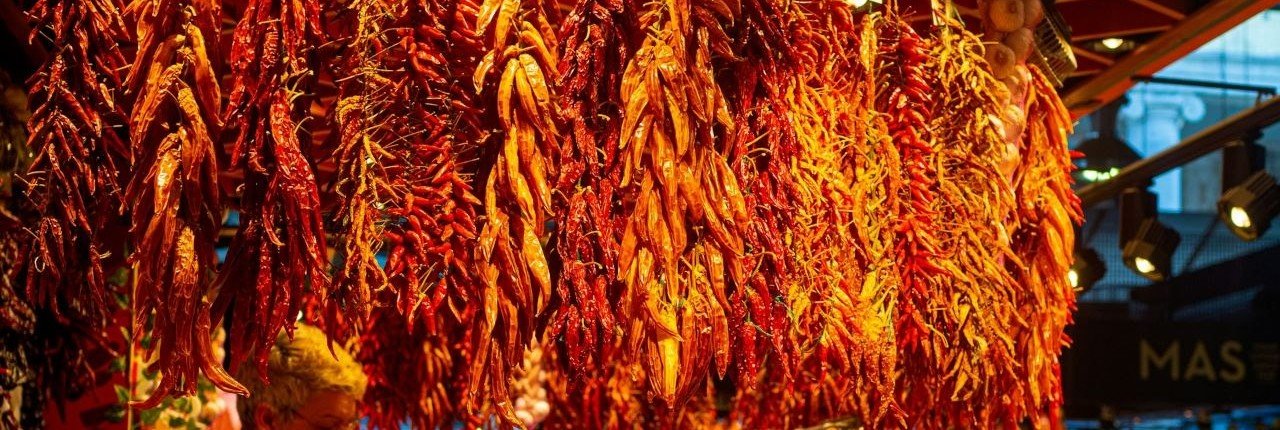
Rehydrate and blend this small, round dried pepper and it turns almost sweet: smoky like pimentón, but fruitier, denser, closer to something confited.
Romesco is the obvious use, but I reach for it just as often to stretch a beurre blanc, thicken a vinaigrette, or deepen a vegetable purée. Quietly one of the most useful things I've brought home from Spain.
5. Cecina de León
Jamón ibérico gets all the attention, but cecina, beef salted and air-dried, is worth seeking out on its own terms. Done well, it's intense without tipping into salty or dry.
What I like most is putting it next to a different tradition: sliced paper-thin over smoked eggplant, with olive oil and za'atar, it becomes two methods of curing meat meeting from opposite ends of the Mediterranean.
6. Cantabrian Anchovies
Forget whatever anchovies you're used to. A good Cantabrian one is soft, its salt held in balance, with a finish that keeps going.
I'll melt a few slowly into a beurre blanc with confit lemon and spoon it over grilled white fish. Just as often, the better version is the plainest: laid straight over a ripe tomato, a little oil, done.
7. Bonito del Norte
A tin of bonito del norte is the best argument that canned fish can beat fresh, provided someone cared enough while making it.
Add white beans, old-variety tomatoes, a fistful of fresh herbs, and good olive oil, and it stops being a snack and becomes dinner.
8. Marcona Almonds
Rounder and softer than a standard almond, with a buttery finish that's earned them a reputation as Spain's best.
Pour a bowl out with drinks, or use them for texture: in a salad, over roasted vegetables, alongside a fruit dessert.
9. Mojama (Andalusia)
Tuna loin, salted and air-dried, sometimes called the ham of the sea. Intense, but never blunt about it.
Slice it thin, add a few Marcona almonds, olive oil, a little lemon zest, and you have a small lesson in Mediterranean cooking: not many ingredients, each one earning its place.
Before you pack your suitcase, spend an hour in a covered market or a good grocer instead of a souvenir shop. Three weeks later, an open jar of ñora peppers on the counter is still a little of that market, still going, in Paris.